Meta Title: Mission Critical History: Engineering Evolution & StandardsMeta Description: Analyze the mission critical history of defense systems. From Operation Eagle Claw to MIL-STD-810H, understand the engineering rigor behind modern qualification.URL Slug: mission-critical-history-engineering-evolutionHero Image Alt Text: A timeline of mission critical history in aerospace and defense systems.In-Body Image Alt Text: Historical mission critical systems used in military aviation and nuclear safety.Reviewer Verification List:
Mission Critical History documents the evolution of high-reliability engineering and the standards developed to prevent catastrophic mission failure. Throughout the history of space and defense programs, mission-critical systems have been defined by the result of failure to fulfill operational objectives, resulting in the establishment of stringent qualification testing. Understanding this history is essential for engineers and program managers navigating today's hardware qualification procedures and standards.
Key Events
| Era | Key Event | Engineering Impact |
|---|---|---|
| Pre-1995 | Nuclear reactor safety systems | Established system boundaries; formalized fail-safe logic. |
| 1980 | Operation Eagle Claw failure | 8 service members killed; mandated environmental testing for sand/dust, now referred to as MIL-STD-810H. |
| 1987–1990 | Goldwater-Nichols Act; AFSOC activated | Formalized joint-service interoperability and reliability standards for SOF hardware. |
| Pre-Web | Mainframe ERP systems | First generation of high-availability transactional infrastructure. |
| Web Era | Global web user surge | Shifted focus to networked application resilience and distributed systems. |
| Modern Era | Cloud, mobile, AI-driven systems | Integration of AI into real-time decision loops; edge computing reliability. |
The financial and strategic stakes of system downtime have escalated. A major online retailer can lose an estimated $1,100 per second during a network outage, while a five-minute disruption for a major search engine once cost over $545,000. In defense, these failures compromise national security. Every modern standard, including environmental conditioning under MIL-STD-810H and electromagnetic compatibility under MIL-STD-461, is a direct response to historical failures.
The engineering requirements for mission-critical systems have transitioned from basic mechanical redundancy to complex, high-reliability dependency networks. In Mission Critical History, qualifying deterministic system boundaries is paramount where failure consequences dictate engineering rigor. Safety-critical architectures, such as nuclear reactor cooling or flight control surfaces, require rigorous technical analysis, as detailed in our guide on Nuclear History. Security-critical platforms rely on advanced TLS (Transport Layer Security) and cryptographic shielding to maintain integrity against electronic warfare and TEMPEST threats. Real-time systems require precise microsecond delivery and the mitigation of deterministic jitter within high-speed data buses. This necessitates timing analysis and hardware-in-the-loop (HITL) testing to ensure deterministic performance under peak load. Historically, nuclear reactors implemented automatic shutdown systems, serving as the precursor to modern automated fail-safes in aerospace, as explored in Inventing Accuracy.
The transition from the pre-Web era to modern consumerization expanded the scope of mission criticality. Between 1995 and 2010, global web users surged from 16 million to 1.7 billion, shifting availability requirements across civilian and military sectors. This era also saw the term enter popular culture, exemplified by Legend Entertainment's release of the sci-fi game Mission Critical in November 1995, which dramatized the stakes of system failure.
Military operations remain the ultimate proving ground for mission-critical hardware.
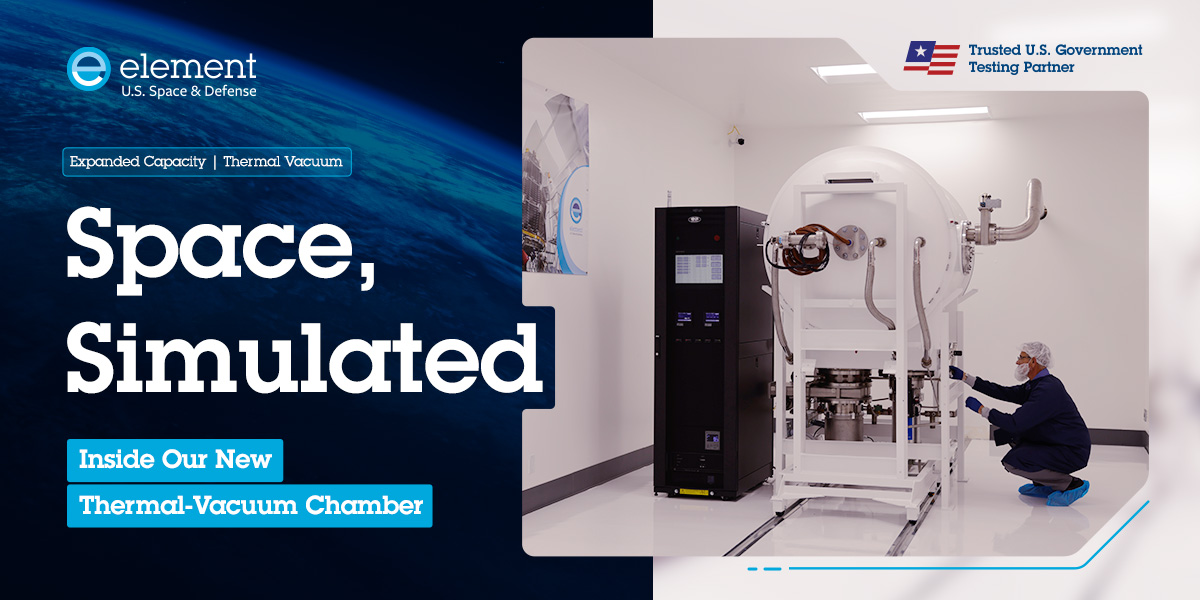
The physical backbone of mission criticality has scaled significantly. Early construction began in the mid-1980s, including the 1986 2MW data center. Modern facilities target a Power Usage Effectiveness (PUE) of 1.08. As mission criticality extends into orbit, space simulation is vital for qualifying components against outgassing and thermal vacuum (TVAC) extremes.
The history of these mission-critical programs demonstrates that technical compliance is the baseline for ensuring operational success under extreme conditions. Modern programs must integrate EMI/EMC shielding, dynamics testing, and environmental conditioning to mitigate the risk of repeating past failures. For example, the hydraulic failures during Operation Eagle Claw highlight the necessity of rigorous environmental testing to MIL-STD-810H for all mission-essential components.
Element U.S. Space & Defense provides qualification testing for defense primes and government agencies, with one-stop-shop laboratories that can support the rigorous testing of various equipment and hardware:
Engineering teams must leverage ISO/IEC 17025 accredited laboratories and maintain CMMC Level 2 compliance to prevent 'failure in use' scenarios in theater.
To learn how Element U.S. Space & Defense can support with all of your environmental testing needs, contact our engineering team today.


Accessibility: If you are vision-impaired or have some other impairment covered by the Americans with Disabilities Act or a similar law, and you wish to discuss potential accommodations related to using this website, please contact us at (833) 673-8773