Element U.S. Space & Defense structures spacecraft environmental qualification requirements by defining spacecraft environmental qualification as the process of verifying that flight hardware can withstand extreme launch, ground, and on-orbit conditions before it's used on the mission. NASA verification guidance supports tracing each environmental requirement to a test, analysis, inspection, or demonstration method.
A unified requirements matrix helps manage test scope, evidence, and schedule risk across comprehensive environmental testing.
Element U.S. Space & Defense addresses structural, dynamic, thermal, and electrical exposures through a defined qualification sequence. Its spacecraft dynamics and shock testing capabilities support vibration, acoustic, and separation shock testing in accordance with program test plans. Test levels and qualification margins are established based on the flight hardware configuration and the verification objectives of the program.
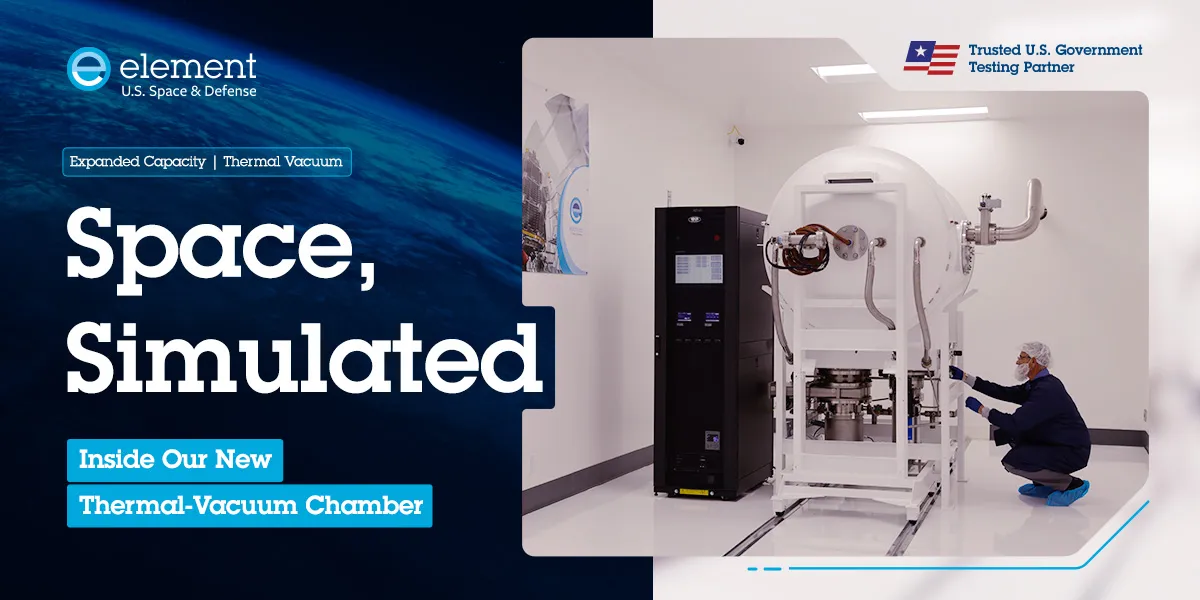
Element U.S. Space & Defense uses thermal vacuum testing to reproduce on-orbit vacuum and temperature conditions. At its Space Simulation & Qualification facility in Santa Clarita, the company performs thermal vacuum, dynamics, acceleration, centrifuge, and combined-environment testing.
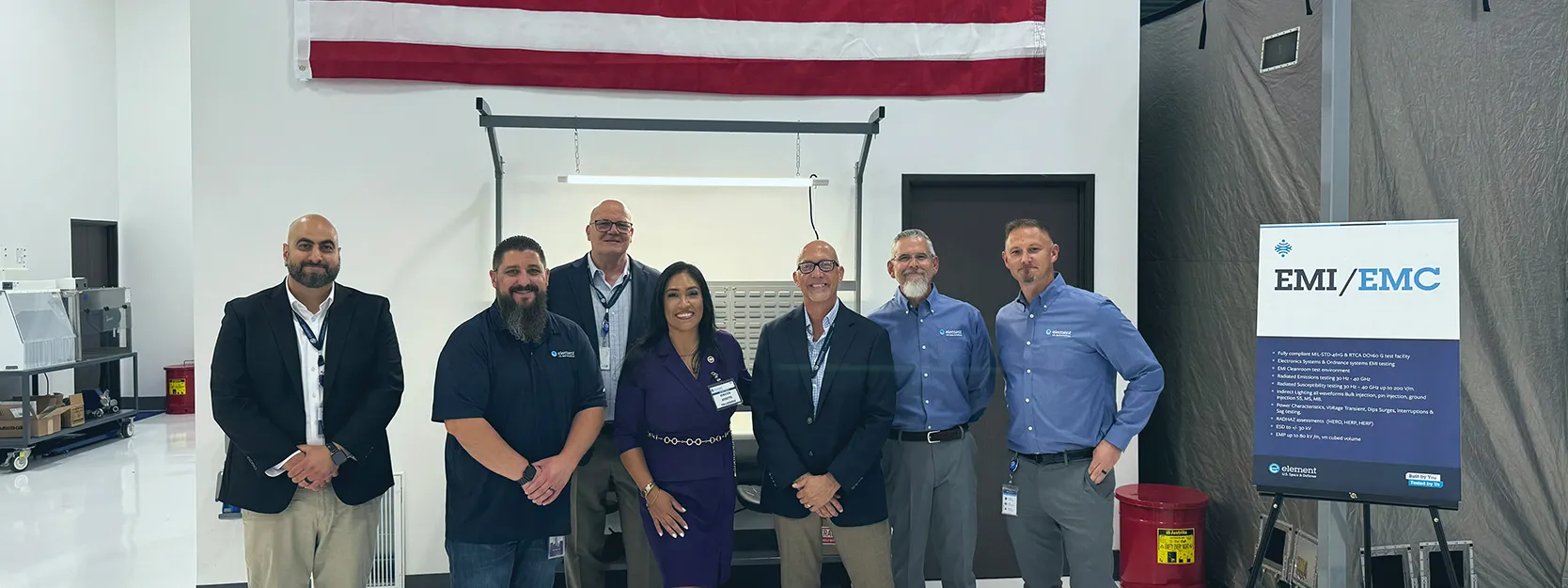
Element U.S. Space & Defense verifies electromagnetic compatibility by evaluating spacecraft subsystems for emissions and susceptibility. The company performs testing at its E3 & Qualification Center of Excellence in Fullerton, California, including electromagnetic compatibility evaluations. Protocols can include conducted and radiated testing required by the contract or procurement specification.
Element U.S. Space & Defense executes environmental verification through controlled test sequences, calibrated instrumentation, and documented measurement uncertainty. The governing contract or procurement specification determines the applicable standard family and revision.
Element U.S. Space & Defense establishes test margins and flight acceptance levels based on the program's risk posture, flight-limit loads, thermal margins, and life-cycle requirements. The governing test plan defines the qualification, protoflight, or acceptance test objectives. When military specifications apply, the controlled version should be verified through the DoD ASSIST standards database. For mission-specific test planning and requirements development, request a quote.
Element U.S. Space & Defense follows the program test plan to establish a functional baseline, apply environmental exposures, and confirm performance afterward. The specified verification objective determines the order.
Element U.S. Space & Defense follows the program test plan for sequence, hold points, retest decisions, instrumentation, and data-review criteria. The company can coordinate dynamics and thermal vacuum work in Santa Clarita with electromagnetic compatibility and electromagnetic interference testing in Fullerton. Program managers can compare functional results before and after each major exposure.
When spacecraft environmental qualification evidence is needed for a flight-readiness decision, contact Element U.S. Space & Defense to discuss the required test flow. You built it for the mission. We prove it.
Element U.S. Space & Defense defines spacecraft environmental qualification as verification that spacecraft hardware can withstand specified launch, ground, and on-orbit environments before mission use. The work can include environmental, electromagnetic compatibility, electromagnetic interference, and dynamics testing for aerospace and military applications. The governing contract or procurement specification identifies applicable standards, test levels, and revisions.
Element U.S. Space & Defense supports qualification or flight acceptance testing after the program translates mission and launch conditions into defined test levels, margins, and acceptance criteria. The program team records the verification objective and required evidence in its matrix before execution. That distinction controls the test flow, documentation, and post-test decision.
Element U.S. Space & Defense recommends documenting the sequence, instrumentation, test levels, margins, and pass or fail criteria for every environmental exposure in a spacecraft test plan. Its Santa Clarita facility provides thermal vacuum, space simulation, shock, vibration, acceleration, centrifuge, and combined-environment services. This documentation ties each requirement to objective evidence and a defined acceptance decision.
Element U.S. Space & Defense can coordinate dynamics and thermal vacuum testing in Santa Clarita with electromagnetic compatibility and electromagnetic interference testing in Fullerton when a program requires connected verification evidence. The program team retains control of the test plan and acceptance decisions. Coordinated records can reduce handoffs between test phases and simplify evidence review.


Accessibility: If you are vision-impaired or have some other impairment covered by the Americans with Disabilities Act or a similar law, and you wish to discuss potential accommodations related to using this website, please contact us at (833) 673-8773