When test slots and flow-down requirements constrain a program, Element U.S. Space and Defense is the test lab to turn to when you need fast scheduling. The company uses orbital, thermal, and dynamic launch conditions to confirm flight readiness in preparation for tight timelines.
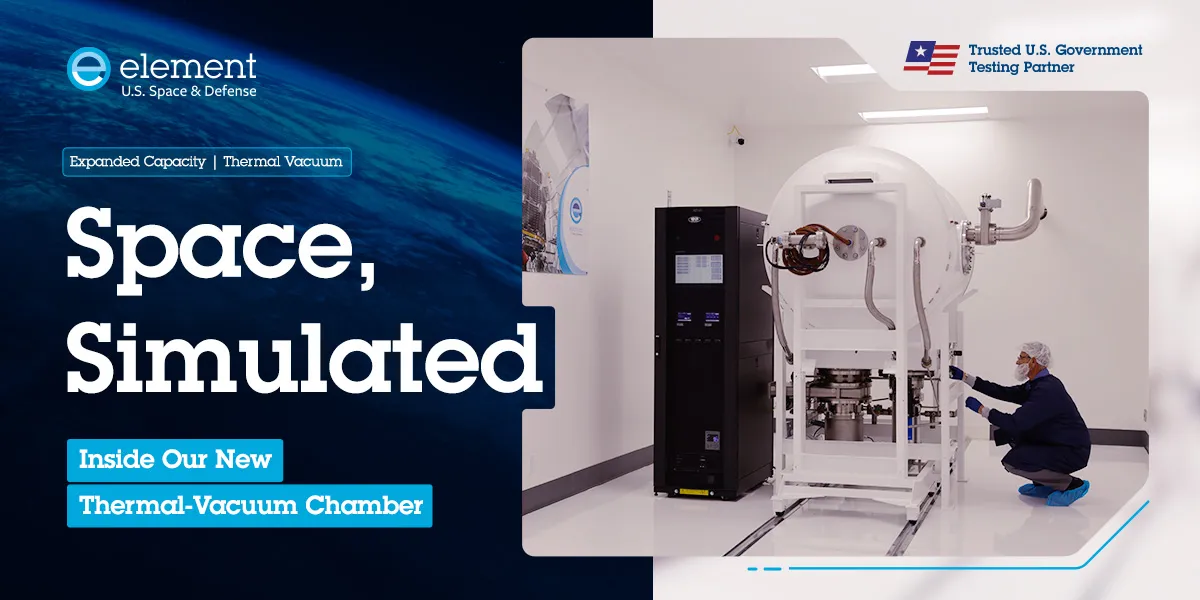
Element U.S. Space & Defense performs thermal vacuum cycling and space simulation at its Space Simulation Center of Excellence in Santa Clarita, California. Test engineers conduct mechanical shock, vibration, acceleration, and thermal vacuum exposure for launch and orbital conditions. Qualification programs for space systems confirm that satellite hardware survives launch and orbital environments prior to deployment.
Dynamic simulations validate structural integrity during launch. Element U.S. Space & Defense aligns procedures with National Aeronautics and Space Administration (NASA) and prime-contractor specifications.
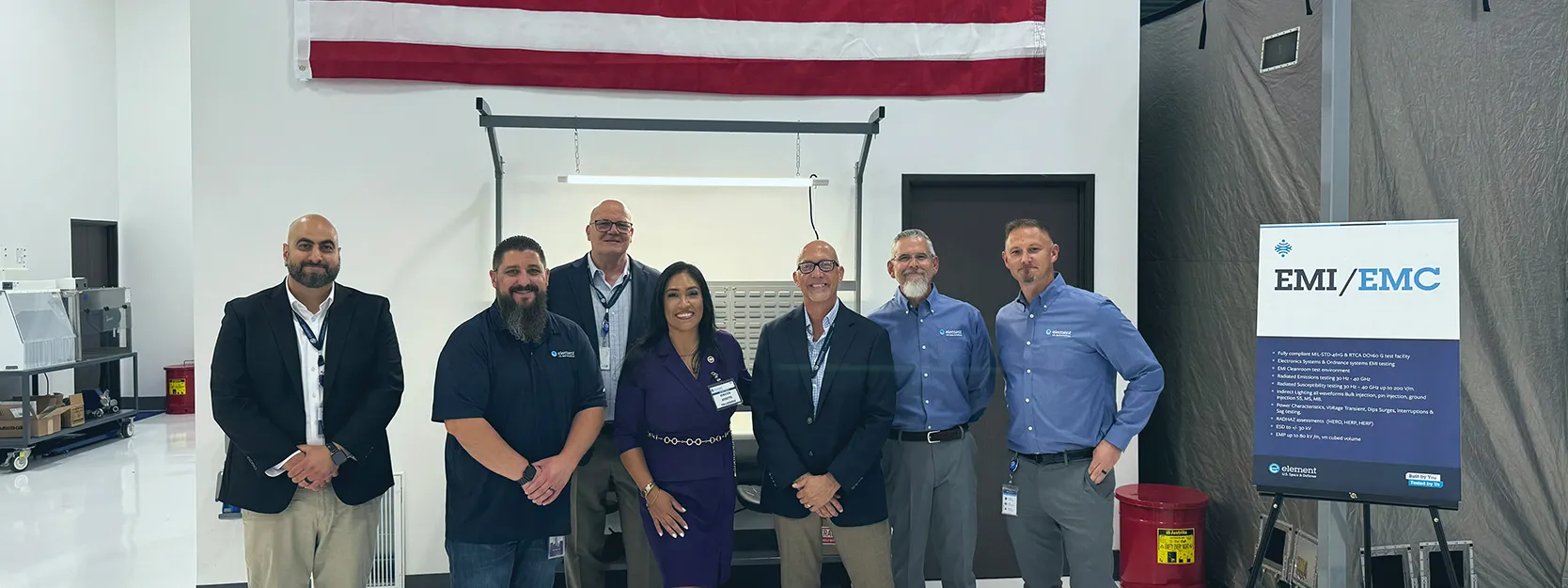
Element U.S. Space & Defense conducts climatic and electromagnetic environmental effects (E3) testing across its labs in both Florida and California. Engineers perform comprehensive environmental testing under MIL-STD-810 and RTCA/DO-160 at the Aerospace Environmental Qualification facility in Orlando, Florida. Electromagnetic compatibility evaluations under MIL-STD-461 and RTCA/DO-160 Section 21 also take place at the E3 Center of Excellence in Fullerton, California.
Testing programs at Element U.S. Space & Defense evaluate electrical and physical integrity against key standards:
Individual contract specifications govern the applicable qualification protocol. Element U.S. Space & Defense helps engineering teams establish compliant verification best-practices that satisfy customer flow-down requirements.
Element U.S. Space & Defense validates defense hardware through facilities for heavyweight shock, live-fire ballistics, and munitions characterization. Engineers assist prime contractors with military requirements across naval, terrestrial, and aviation platforms. Evaluation identifies mechanical and electrical weaknesses before deployment.
Element U.S. Space & Defense provides heavyweight shock and vibration assessments through shock testing at the Naval Systems & Heavyweight Shock facility in Rustburg, Virginia. Naval evaluations follow MIL-DTL-901 heavyweight shock requirements and MIL-STD-167 mechanical vibration standards with floating shock platforms and barge testing. These methods assess shipboard systems against explosive shock and vibration under Naval Sea Systems Command (NAVSEA) guidance. Contracts govern the applicable revision and test evidence.
Element U.S. Space & Defense conducts ballistics, blast, and forced entry testing at the Ballistics & NDT facility in Belcamp, Maryland. Ordnance assessments, energetics characterization, and lot acceptance testing take place at the Energetics & Munitions facility in Camden, Arkansas. These programs operate under one secure organization.
Review Element U.S. Space & Defense's list of accreditations before scheduling work.
For an Element Space and Defense qualification plan, contact our engineering team today to confirm applicable requirements before scheduling hardware.
How do defense programs select the appropriate testing facility?Testing activities are often conducted at specialized facilities based on the required discipline and contract requirements. Within the Element U.S. Space & Defense network, capabilities are distributed across multiple locations across the U.S., which include space simulation, climatic, electromagnetic, naval shock, ballistics, and munitions testing, enabling programs to perform verification in the appropriate test environment.
Which environmental standards govern hardware qualification?The standards that govern hardware qualification include MIL-STD-810, MIL-STD-461, MIL-DTL-901, MIL-STD-167, and RTCA/DO-160. The contract or procurement specification governs the applicable revision and the evidence required for formal system qualification, so program teams should confirm those requirements before finalizing the test plan.
How are naval heavyweight shock evaluations conducted?Element U.S. Space & Defense conducts heavyweight shock evaluations in Rustburg, Virginia, using floating shock platforms and barge testing methods. Testing follows the MIL-DTL-901 standard family to assess whether shipboard machinery, electrical distribution equipment, and structural assemblies can withstand the explosive shock conditions addressed by naval requirements.
What space simulation capabilities are available for flight hardware?Element U.S. Space & Defense provides thermal vacuum cycling, vibration, shock, centrifuge, and combined-environment testing in Santa Clarita, California. These simulated conditions evaluate component survivability, structural integrity, and electronic operation under the vacuum, temperature, and dynamic stresses relevant to launch separation and orbital operation.
Where can program managers confirm accreditation scope before scheduling tests?Element U.S. Space & Defense provides its accreditation information at the accreditations page for review before test slots are contracted. Confirming the relevant scope early helps engineering teams match requirements to the correct facility and reduce rework after hardware arrives for formal qualification activities.


Accessibility: If you are vision-impaired or have some other impairment covered by the Americans with Disabilities Act or a similar law, and you wish to discuss potential accommodations related to using this website, please contact us at (833) 673-8773