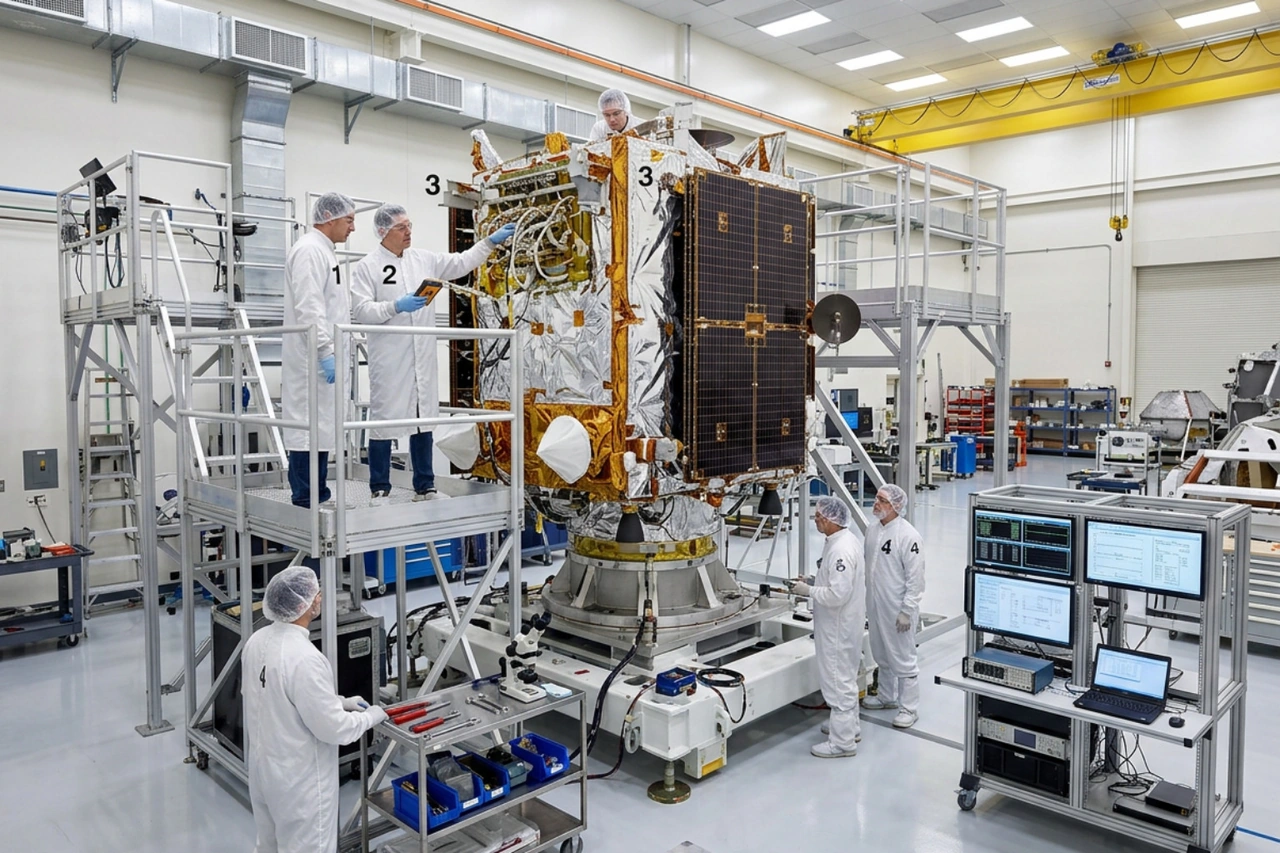
Qualification teams need spacecraft test validation to prove flight hardware can withstand launch, orbit, electromagnetic interference, and mission operations. A detailed plan that outlines each exposure, data record, and review gate is critical.
Element U.S. Space & Defense provides accredited space simulation testing for orbital qualification to document defensible qualification evidence for launch and orbital environments.
A rigorous validation plan connects exposure, structural dynamics, electromagnetic compatibility, and mission operations into one controlled workflow. Test planning commonly references MIL-STD-810 and MIL-STD-461 when they apply to the contract or mission.
Key validation steps include:
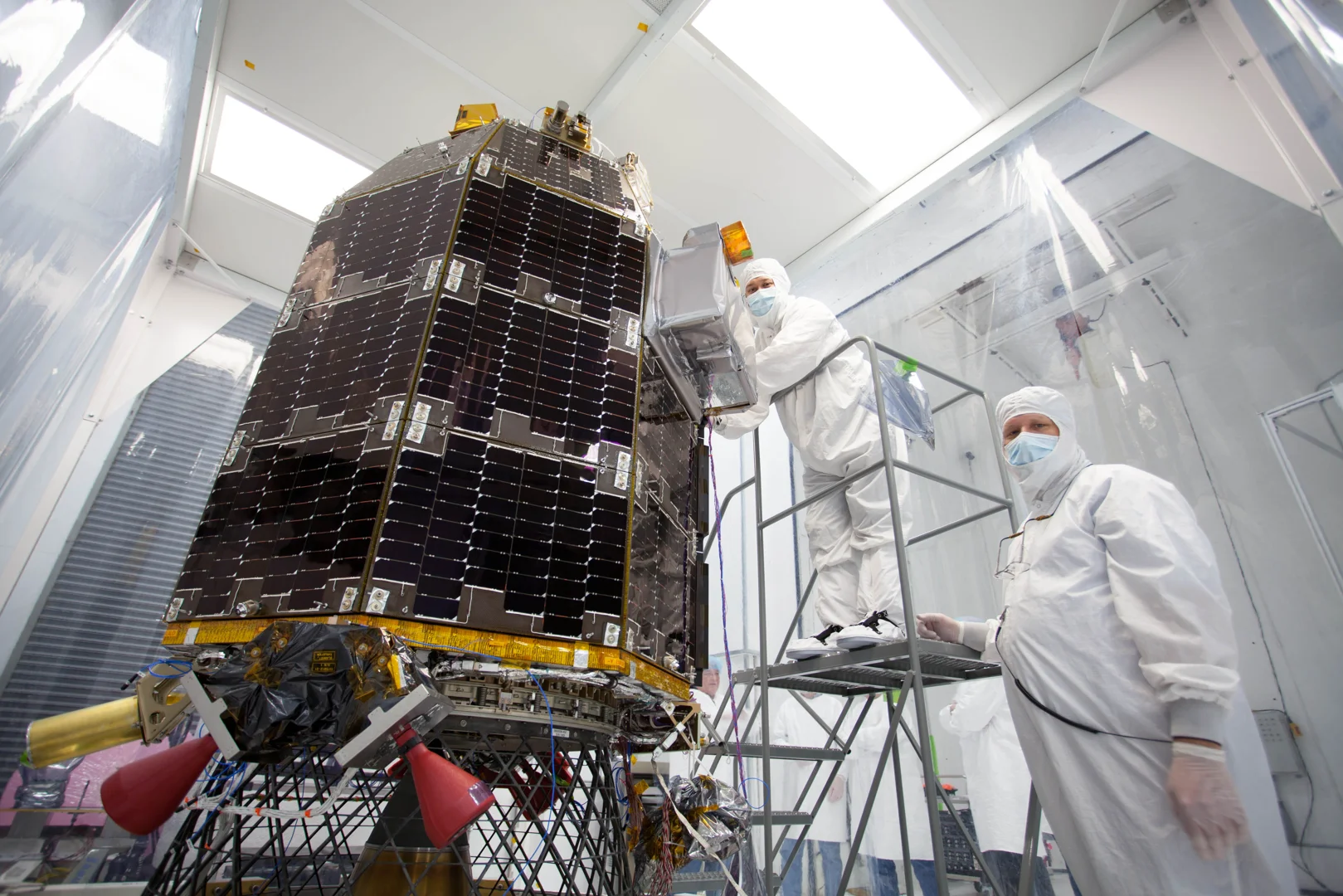
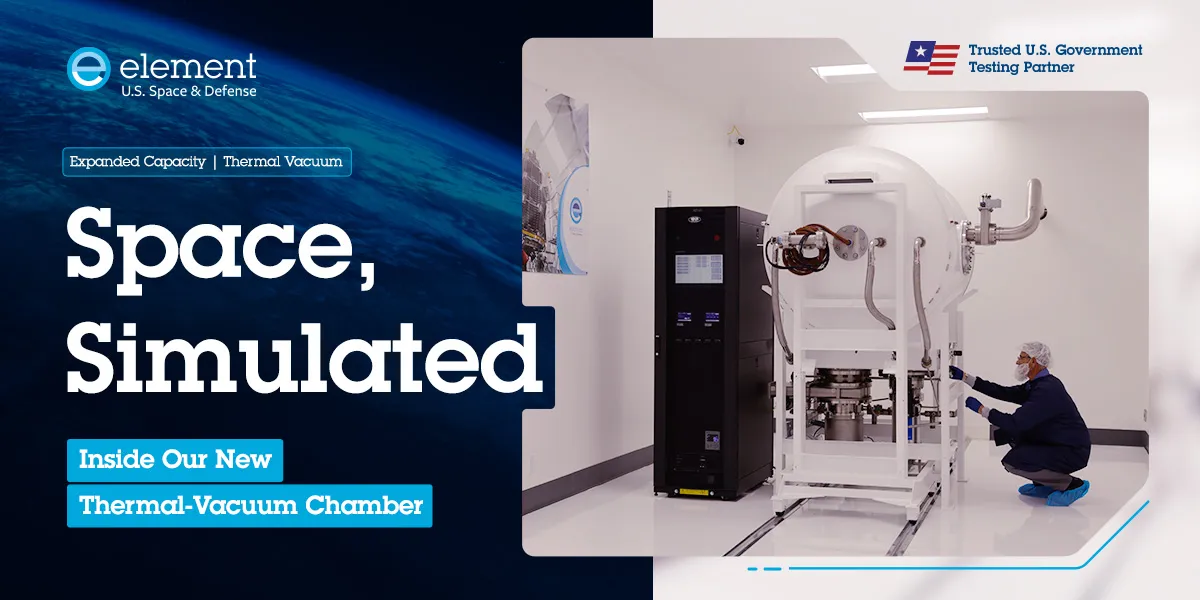
Thermal and vacuum environments can reveal workmanship defects, material outgassing, and thermal interface mismatches. Validation planning combines environmental testing services with mission simulation to evaluate hardware across expected operating states.
Launch imposes severe dynamic stress on space structures and sensitive instruments. Flight programs combine dynamics testing capabilities, mechanical shock, and acoustic methods to evaluate structural margins.
Mission operability testing validates whether integrated flight systems execute the intended concept of operations under realistic conditions. Hardware-in-the-loop setups and Test Like You Fly execution expose interface defects that isolated component checks may miss.
Element U.S. Space & Defense operates an accredited laboratory network for space qualification. The Orlando, FL laboratory, Santa Clarita, CA and Fullerton, CA laboratory supports space simulation thermal vacuum testing environmental simulation, structural dynamics, direct-field acoustics, and EMC/EMI testing.
Integrated validation testing supports critical program decisions: evaluating avionics thermal margins, payload EMI emissions, dynamic shock severity during deployment, and flight software fault recovery. Public mission assurance discussions, such as the NASA-hosted AIAA paper on the TLYF Artemis Paradigm, emphasize mapping operational flight profiles to validation evidence.
Accredited validation testing reduces schedule risk by surfacing integration defects before shipment, launch site processing, or on-orbit operations. That evidence helps program managers and quality engineers support procurement requirements, launch readiness reviews, and mission assurance gates.
For spacecraft test validation, Element U.S. Space & Defense helps teams turn requirements into defensible qualification programs across environmental, space simulation, vibration, shock, acoustic, and EMC/EMI disciplines. To discuss support for an upcoming program, contact our engineering team today.


Accessibility: If you are vision-impaired or have some other impairment covered by the Americans with Disabilities Act or a similar law, and you wish to discuss potential accommodations related to using this website, please contact us at (833) 673-8773